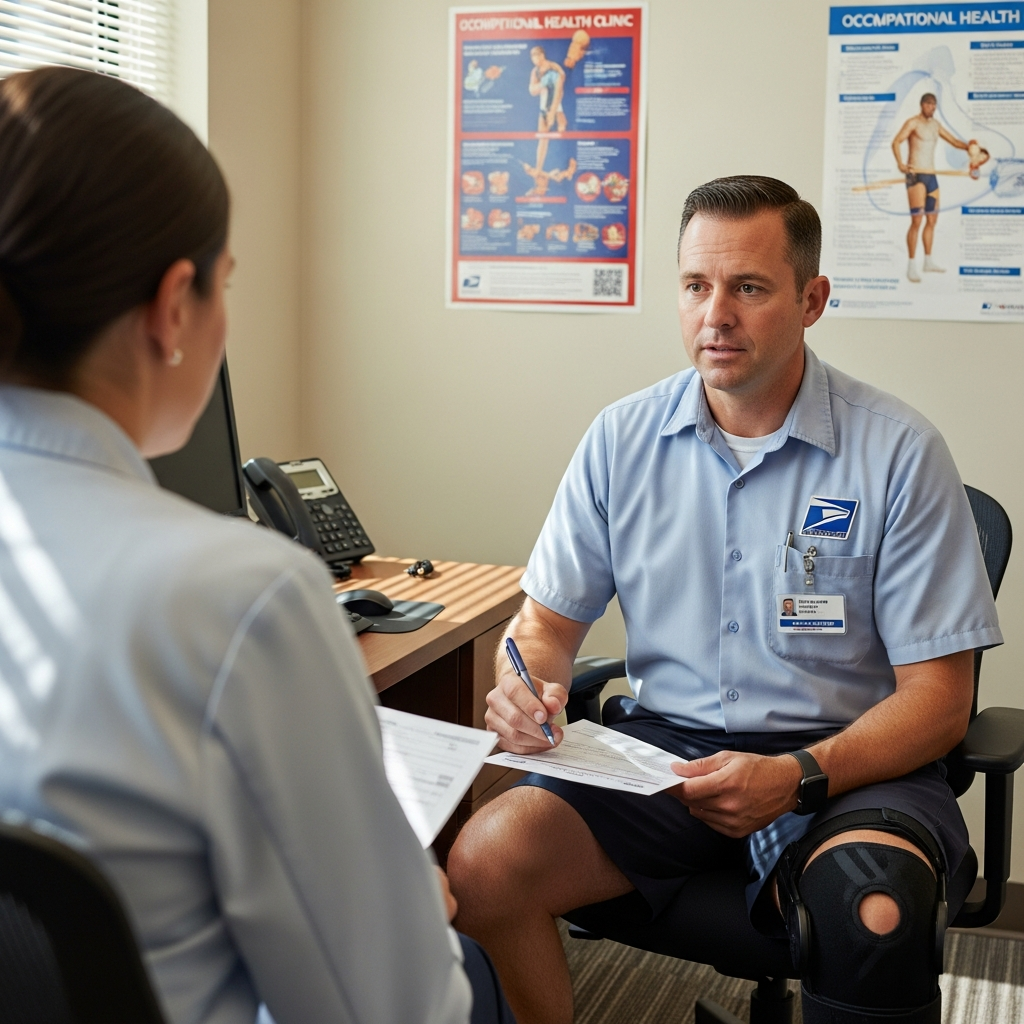
OWCP Doctors for Federal Job-Related Injuries in Maryville

You’re rushing to finish that report before the afternoon deadline when you feel it – a sharp twinge in your lower back as you reach for a heavy file box. Or maybe it happens during your daily rounds at the postal facility, that moment when you lift a mail tray and something just… gives way.
That sinking feeling hits immediately. Not just the physical pain, but the cascade of thoughts that follows: *Is this serious? Will I need time off? How do I even report this? And wait – who’s going to pay for treatment if I can’t work?*
If you’re a federal employee in Maryville dealing with a workplace injury, you’re probably discovering that the whole workers’ compensation system feels like trying to navigate a maze… blindfolded. The Office of Workers’ Compensation Programs (OWCP) has its own rules, its own paperwork, and – here’s the kicker – its own specific requirements for which doctors you can see.
You might think you can just pop over to your regular family doctor or that urgent care clinic down the street. Makes sense, right? Wrong. Well, not exactly wrong, but it’s complicated in that special way that government processes tend to be. The OWCP system operates differently than your regular health insurance, and choosing the wrong provider could mean you’re stuck with bills that should have been covered.
Here’s what most federal employees don’t realize until they’re knee-deep in the process: OWCP has very specific rules about approved physicians. Some doctors can treat you immediately without prior authorization. Others require forms and approvals that can take weeks. And some? Well, some might not be covered at all, leaving you holding a very expensive bill.
I’ve seen too many dedicated federal workers – postal employees, TSA agents, federal building maintenance staff, VA hospital workers – get caught off guard by this system. They’re already dealing with pain, maybe missing work, worried about their families… and then they discover they’ve been seeing the “wrong” doctor according to OWCP guidelines.
The thing is, Maryville and the surrounding areas have excellent medical facilities and specialists. The University of Tennessee Medical Center isn’t far, you’ve got orthopedic practices, physical therapy clinics, pain management specialists – really solid healthcare options. But which ones work with OWCP? Which ones understand the specific paperwork requirements? Which physicians know how to document your injury in a way that won’t cause delays in your claim?
That’s where things get tricky. Because while your injury might be straightforward – a herniated disc, carpal tunnel syndrome, a shoulder strain from repetitive motion – the administrative side can become a full-time job in itself. You’re already dealing with pain and potentially lost wages. The last thing you need is to spend hours on the phone trying to figure out why your claim is being delayed because of some documentation issue.
And let’s be honest about something else: not all doctors understand the federal workers’ compensation system. Your family physician might be brilliant at treating your condition, but if they don’t know how to properly complete OWCP forms or communicate with the claims office, your treatment could get derailed through no fault of anyone’s medical expertise.
Some federal employees in Maryville drive to Knoxville thinking they’ll have more OWCP provider options there. Others stick close to home but end up jumping through unnecessary hoops. A few get lucky and stumble onto providers who really understand the system… but that shouldn’t be a matter of luck.
What you need – what every federal worker dealing with a job-related injury needs – is clarity. Which doctors in the Maryville area can you see right away? What’s the process for getting specialized care approved? How do you make sure you’re documenting everything correctly from day one? And perhaps most importantly, how do you focus on healing instead of drowning in paperwork?
We’re going to walk through all of this together. I’ll show you exactly how to find OWCP-approved physicians in your area, what questions to ask when you call their offices, and how to navigate the approval process for specialists when you need them. Because your job is demanding enough without having to become an expert in federal workers’ compensation law just to get your back fixed.
You’ve got enough to worry about. Let’s make this part easier.
What OWCP Actually Means (And Why It Matters to You)
You’ve probably heard the acronym OWCP thrown around at work, but let’s be honest – most people have no clue what it actually stands for. The Office of Workers’ Compensation Programs is basically the federal government’s version of workers’ comp, except… well, it’s way more complicated than your typical workplace injury claim.
Think of OWCP as that friend who means well but has a really complex filing system. They want to help when you get hurt on the job, but you’ve got to navigate their particular way of doing things. And trust me, their way involves a lot of paperwork and very specific doctors.
The Federal Worker’s Dilemma
Here’s where things get tricky – and honestly, a bit frustrating. When you work for the federal government and get injured on the job, you can’t just walk into any doctor’s office like you would with regular health insurance. OWCP has its own network of approved physicians, and if you want your treatment covered, you need to stay within that network.
It’s kind of like being given a gift card that only works at certain stores. Sure, it’s valuable, but your options are limited. This system exists for good reasons – quality control, cost management, specialized knowledge of federal injury claims. But when you’re dealing with pain or mobility issues, the last thing you want is bureaucratic hoops to jump through.
Why Location Matters More Than You’d Think
Now, you might be wondering why we’re focusing specifically on Maryville. Well, if you’re a federal employee in this area – whether you work at the courthouse, postal service, TSA, or any other federal agency – finding the right OWCP doctor nearby isn’t just about convenience. It’s about continuity of care.
Think about it this way: treating a work-related injury isn’t usually a one-and-done situation. You might need weeks or months of follow-up appointments, physical therapy, or specialized treatments. Having to drive hours to see an OWCP-approved doctor? That becomes another barrier to your recovery. And honestly, who has time for that when you’re already dealing with the stress of an injury and potential time off work?
The Authorization Dance
Here’s something that catches a lot of federal employees off guard – you can’t just show up to an OWCP doctor whenever you want. There’s this whole authorization process that has to happen first. You need to file your initial claim (Form CA-1 for traumatic injuries or CA-2 for occupational diseases), get it approved, and then receive authorization for specific treatments.
It’s like needing a hall pass in high school, except the consequences of not following the rules properly can affect your paycheck and medical coverage. The good news? Once you understand the system, it becomes more manageable. The bad news? Nobody really explains this stuff clearly upfront.
What Makes an OWCP Doctor Different
You might assume that any doctor can treat a work injury, but OWCP physicians have specialized training in federal workers’ compensation cases. They understand the specific documentation requirements, the types of injuries common in federal workplaces, and most importantly – they know how to navigate the OWCP system on your behalf.
Regular doctors, bless them, often get frustrated with OWCP’s paperwork requirements. They’re used to dealing with standard insurance companies, not federal bureaucracy. An OWCP-approved physician has already figured out how to work within this system efficiently.
The Reality Check
Let’s be real for a moment – the OWCP system isn’t perfect. It can feel slow, bureaucratic, and sometimes downright confusing. You might find yourself wondering why something that seems straightforward (you got hurt at work, you need medical care) has to involve so many forms and approvals.
But here’s the thing… once you’re connected with the right OWCP doctor in your area, someone who knows the ropes and genuinely cares about getting you back to full health, the system starts working in your favor. These physicians understand that your injury affects more than just your physical health – it impacts your ability to work, support your family, and maintain your quality of life.
The key is finding that right doctor who combines medical expertise with system savvy. In Maryville, you’ve got options, and knowing how to evaluate them makes all the difference in your recovery experience.
Finding the Right OWCP Doctor – Your Inside Track
Here’s what nobody tells you upfront: not every doctor who claims they handle federal workers’ compensation actually knows what they’re doing. I’ve seen too many people get bounced around because their physician didn’t understand the paperwork maze that comes with OWCP claims.
Start by asking potential doctors directly – “How many OWCP cases do you handle monthly?” If they hesitate or give you a vague answer, that’s your cue to keep looking. You want someone who can rattle off the forms (CA-16, CA-17, CA-20) like they’re reciting their own phone number.
Pro tip: Check with your local postal workers’ union or federal employee association. They keep unofficial lists of doctors who actually get results. It’s like having an inside connection – and honestly, that’s exactly what it is.
The Initial Appointment Strategy That Actually Works
Don’t just show up and hope for the best. This appointment could determine whether your claim gets approved or denied, so treat it like the important meeting it is.
Bring everything – and I mean everything. Your SF-1 or CA-1 form, any witness statements, photos of the incident scene if you have them, and a detailed timeline of what happened. Write down your symptoms day by day if possible. That nagging shoulder pain that started three days after you lifted those heavy boxes? Document it.
Here’s something most people miss: bring a list of every medical provider you’ve seen, even if it seems unrelated. That physical therapy you had two years ago for a different injury? Mention it. OWCP doctors need the full picture to write reports that won’t get challenged later.
Navigating the Treatment Authorization Maze
This is where things get tricky – and honestly, a little frustrating. Your OWCP doctor can’t just order whatever treatment they think you need. They have to request authorization for everything beyond basic office visits.
Here’s the system: your doctor submits treatment requests through the OWCP portal (yes, there’s actually a specific portal for this). But here’s what they don’t advertise – if your doctor frames the request properly, approvals happen much faster.
Make sure your doctor understands they need to tie every treatment recommendation back to your specific work injury. Physical therapy isn’t just “recommended” – it’s “necessary to restore function lost due to the lifting injury sustained on [specific date] while performing federal duties.” See the difference? It’s all in the language.
When Things Go Sideways – Your Action Plan
Sometimes claims get denied. Sometimes doctors write reports that don’t support your case. Don’t panic – there are specific steps that can turn things around.
First, request a copy of any report your doctor sent to OWCP. You have the right to see it, and you need to know exactly what was said about your condition. If the report doesn’t accurately reflect your symptoms or their connection to your work injury, you can ask your doctor to submit an amended report.
Actually, that reminds me… if your initial doctor isn’t being responsive or seems reluctant to support your claim, you can request a referral to a different OWCP-authorized physician. You’re not stuck with someone who isn’t advocating for your case.
The Follow-Up Game Plan
Your relationship with your OWCP doctor doesn’t end after the first appointment – it’s more like a partnership that needs consistent attention. Schedule regular check-ins, even if you’re feeling better. Why? Because OWCP loves to close cases when they think you’re “fully recovered,” and sometimes that happens prematurely.
Keep a simple symptoms journal between appointments. Nothing fancy – just note your pain levels, what activities are difficult, how work is affected. Your doctor needs this ongoing picture to write compelling progress reports.
And here’s something that might save you headaches down the road: always ask for copies of any reports or forms your doctor submits to OWCP. Request them at each visit. Having your own complete file becomes crucial if you ever need to appeal a decision or prove continuity of treatment.
The bottom line? The right OWCP doctor in Maryville isn’t just treating your injury – they’re building a case that protects your benefits and supports your recovery. Choose wisely, communicate clearly, and don’t be afraid to advocate for yourself throughout the process.
When Your Case Hits a Wall (And Why It Happens)
Let’s be honest – navigating OWCP with a job-related injury can feel like you’re speaking a foreign language while blindfolded. You’re already dealing with pain, maybe missing work, and then… paperwork. Mountains of it.
The biggest challenge most federal employees face? Getting their claim accepted in the first place. OWCP denies a surprising number of initial claims – not because they’re fraudulent, but because the paperwork wasn’t quite right. Maybe your supervisor didn’t complete their section properly. Maybe the medical evidence wasn’t specific enough about how your injury connects to your job duties.
Here’s what actually helps: Don’t try to be your own lawyer. Find an OWCP doctor in Maryville who’s seen this dance before. They know exactly what language needs to be in your medical reports. They understand that saying “patient has back pain” isn’t enough – OWCP wants to know that your “lumbar strain is consistent with repetitive lifting of 40-pound mail bags over a six-month period.”
The Doctor Shopping Dilemma
This one’s tricky. You find a great doctor, but then OWCP says you need to see their approved physician for an independent medical exam. Suddenly you’re wondering – is this doctor going to actually listen to me, or are they just trying to get me back to work as quickly as possible?
The reality? Some OWCP-approved doctors are fantastic advocates for injured workers. Others… well, let’s just say their bedside manner could use work. The key is knowing that you can request a different approved doctor if the first one doesn’t seem to understand your situation. Don’t suffer through months with someone who dismisses your concerns.
When Your Benefits Get Cut Off
This is probably every federal employee’s worst nightmare – you’re finally getting treatment, maybe some compensation for time off work, and then… nothing. Your benefits stop. Often with little warning or explanation that makes sense.
Usually this happens because OWCP decides you’ve reached “maximum medical improvement” – basically, they think you’re as good as you’re going to get. Sometimes they’re right. Sometimes they’re very, very wrong.
If this happens to you, don’t panic (easier said than done, I know). You have options. You can request a second opinion, appeal the decision, or ask for vocational rehabilitation if you can’t return to your old job. The timeline matters here though – you typically have 30 days to file an appeal, so don’t sit on it.
The Part-Time Work Puzzle
Here’s a scenario that trips up tons of people: your doctor says you can work part-time or with restrictions, but your agency can’t accommodate that. Maybe you’re a mail carrier who can’t lift more than 10 pounds, or a border patrol agent who can’t walk long distances.
OWCP’s solution is often vocational rehabilitation – essentially job retraining. Sounds great in theory, right? In practice… it’s complicated. The training might take years. The new job might pay significantly less. And you’re still dealing with your injury through all of this.
The smartest approach? Work closely with a vocational rehabilitation counselor who understands federal employment. They can help identify positions within your agency that might work with your restrictions – something you might not have considered.
Documentation Overload (But It’s Worth It)
I wish I could tell you there’s a way around this, but… keep everything. Every doctor’s visit, every form, every phone call with OWCP. I mean everything.
That said, don’t just throw papers in a box. Create a simple system – maybe a binder with sections for medical records, correspondence, claim forms. When OWCP asks for something you submitted six months ago (and trust me, they will), you’ll be ready.
The Waiting Game
OWCP moves slowly. Really slowly. We’re talking weeks or months for decisions that feel urgent when you’re in pain and worried about paying bills.
The hardest part? You can’t really speed it up. But you can stay on top of it. Call regularly (politely) to check on your claim status. Make sure they have everything they need. Sometimes a simple phone call can unstick a file that’s been sitting on someone’s desk.
Look, dealing with OWCP isn’t fun for anyone. But having the right medical team in your corner – doctors who understand the system and genuinely care about getting you better – makes all the difference. Don’t go through this alone.
What to Expect During Your First Visit
Walking into that first appointment with an OWCP doctor can feel a bit like stepping into unknown territory. You’re probably wondering what questions they’ll ask, how long it’ll take, or – let’s be honest – whether they’ll actually believe your injury is as serious as it feels.
Here’s the thing: most OWCP-approved physicians in Maryville see federal employees regularly. They get it. They understand the unique demands of federal work, whether you’re dealing with repetitive stress from desk work or a more dramatic injury that happened on the job.
Your first visit will likely run 45 minutes to an hour – longer than a typical doctor’s appointment because they need to document everything thoroughly. Bring your CA-16 form (if you have one), any previous medical records related to your injury, and honestly? A list of questions written down somewhere. You know how it is… you think of a million things to ask, then suddenly your mind goes blank when you’re sitting there in that paper gown.
The doctor will want to understand not just your current symptoms, but how the injury happened and how it’s affecting your daily work. Don’t be surprised if they ask detailed questions about your job duties – they’re not being nosy, they’re building a complete picture for your claim.
The Documentation Process (And Why It Matters)
This is where things get a bit methodical, and I’ll be straight with you – it can feel frustratingly slow. OWCP doctors need to document everything with the precision of someone writing a legal brief, because in many ways, that’s exactly what they’re doing.
Every visit, every treatment recommendation, every improvement (or lack thereof) goes into reports that become part of your federal workers’ compensation file. This isn’t your doctor being overly cautious – it’s protecting you. When OWCP reviews your case months or even years down the line, this documentation is what stands between you and potential claim denials.
The upside? Good documentation often means faster approvals for treatments you need. The downside? It means your doctor might seem more focused on their computer screen than you’d prefer. It’s not personal – it’s the system they’re working within.
Realistic Timelines for Treatment and Recovery
Let’s talk turkey about timelines, because I’ve seen too many federal employees get frustrated when their recovery doesn’t match their expectations – or their agency’s pressure to return to work.
For minor injuries – think small cuts, minor sprains, or brief exposure incidents – you might see significant improvement within 2-4 weeks. But here’s what’s important: even “minor” workplace injuries can have complications, especially if you’re dealing with underlying conditions or if your job duties aggravate the problem.
More significant injuries? We’re looking at months, not weeks. A serious back injury might require 6-12 months of treatment, and that’s completely normal. Repetitive stress injuries can be particularly tricky – they often took months or years to develop, so expecting them to heal in a few weeks is… well, it’s setting yourself up for disappointment.
Your OWCP doctor will likely give you conservative estimates, and there’s wisdom in that approach. It’s better to be pleasantly surprised by faster healing than frustrated by setbacks.
Navigating Follow-Up Care and Referrals
Most workplace injuries don’t resolve with just one doctor and one treatment approach. You might need physical therapy, specialist consultations, or ongoing monitoring. In Maryville, your OWCP doctor will coordinate these referrals, but – and this is crucial – everything needs OWCP approval before you proceed.
Don’t schedule that MRI or specialist appointment on your own, even if you’re eager to move things along. Unauthorized treatments can leave you holding the bill, and trust me, medical bills aren’t exactly pocket change these days.
Follow-up appointments typically happen every 2-4 weeks initially, then spread out as you improve. Your doctor will adjust your work restrictions based on your progress, and yes, this might mean gradual increases in your duties rather than an all-or-nothing return to full capacity.
Preparing for the Long Game
Federal workers’ compensation cases can extend well beyond your initial recovery. Some injuries require ongoing management, and others might need periodic reevaluation. Building a good relationship with your OWCP doctor in Maryville means thinking beyond just getting back to work – it’s about maintaining your health and protecting your rights as a federal employee for years to come.
Remember: this process isn’t just about treating your injury. It’s about documenting your experience, protecting your benefits, and ensuring you can continue serving in your federal role without compromising your long-term health.
Finding Your Way Forward
Look, dealing with a federal workplace injury while navigating OWCP can feel like you’re trying to solve a puzzle with half the pieces missing. You’re managing pain, paperwork, and probably some anxiety about your job security – and honestly? That’s completely normal. Every federal employee we’ve worked with has felt that same overwhelming mix of frustration and uncertainty.
The thing is, you don’t have to figure this out alone. Finding the right doctor who truly understands the OWCP system isn’t just about getting medical care (though that’s obviously crucial) – it’s about having someone in your corner who speaks the language of federal workers’ compensation. Someone who knows exactly what documentation OWCP needs, when they need it, and how to present your case in a way that actually gets results.
We’ve seen too many dedicated federal employees – people who’ve served their communities for years – get caught up in bureaucratic tangles that could have been avoided with the right medical partner from the start. Maybe you’re dealing with a back injury from lifting heavy mail bags, or perhaps you’re struggling with repetitive stress from years of computer work. Whatever brought you here, your injury is real, your concerns are valid, and you deserve care that acknowledges both your medical needs and your professional situation.
The Maryville area has some excellent healthcare providers who really get what federal employees go through. They understand that your injury isn’t just about healing – it’s about getting back to serving your community, supporting your family, and maintaining the career you’ve worked so hard to build. These doctors know how to communicate with OWCP in ways that protect your interests while ensuring you receive appropriate treatment.
Here’s something that might surprise you: seeking help early actually strengthens your position. I know it might feel like admitting weakness or creating problems, but the opposite is true. Getting proper medical documentation from an OWCP-experienced physician creates a solid foundation for your claim and often leads to faster resolution and better outcomes.
Your health and your livelihood matter – full stop. You’ve spent your career taking care of others through your federal service, and now it’s time to take care of yourself. Whether you’re just starting to navigate an injury claim or you’re feeling stuck in the process, reaching out for guidance isn’t giving up… it’s being smart.
If you’re ready to connect with healthcare providers who understand your unique situation, we’re here to help. Our team works specifically with federal employees dealing with workplace injuries, and we know exactly which doctors in the Maryville area have the experience and expertise to support your case effectively.
Don’t let another day pass feeling uncertain about your next steps. Give us a call – we’ll listen to your situation, answer your questions (no matter how basic they might seem), and help you connect with the right medical care. Because you deserve a healthcare team that’s as committed to your wellbeing as you’ve been to your federal service.
You’ve got this. And we’ve got you.