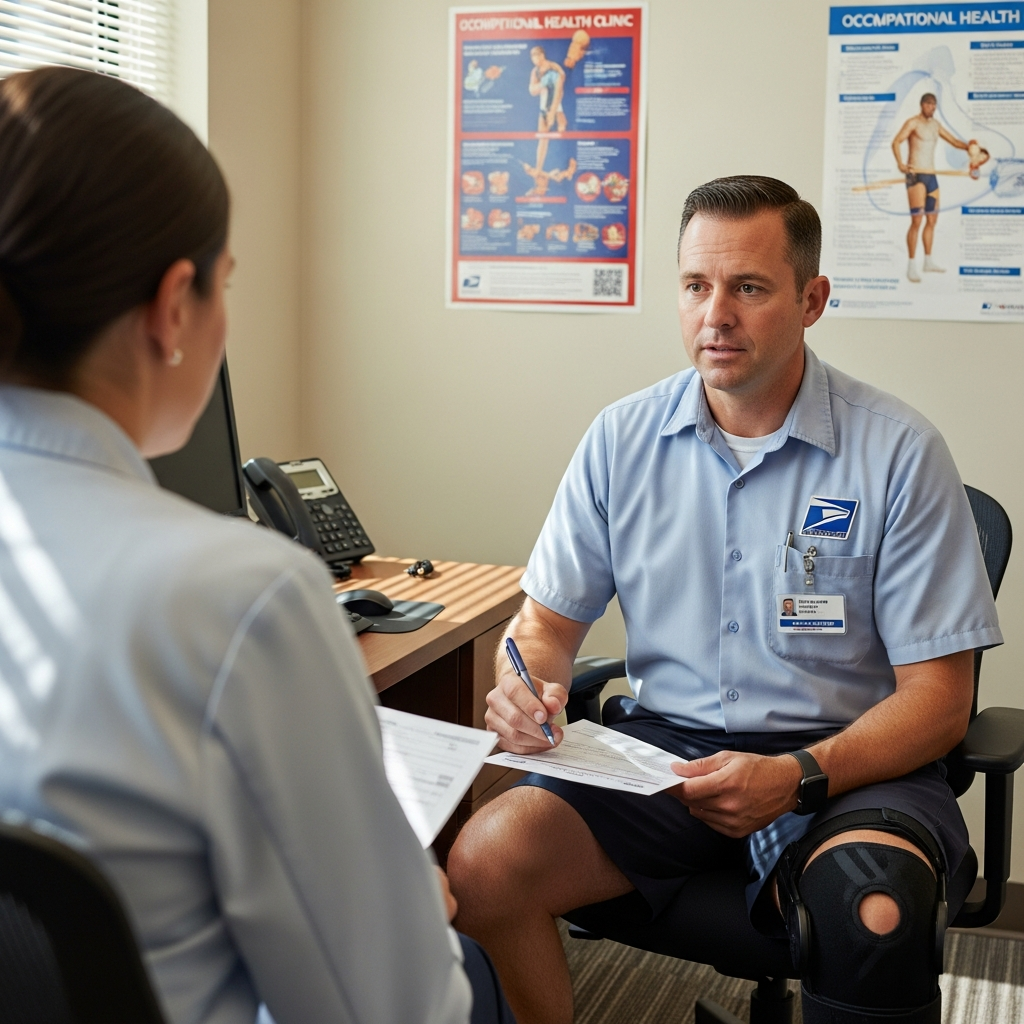
Picture this: You’ve been injured on the job, you’re dealing with pain, you’re already stressed about missing work, and now someone hands you a stack of forms and tells you that you need to see an OWCP-approved doctor – and that if you don’t do this exactly right, your federal workers’ compensation benefits could be delayed or denied.
That’s… a lot. Especially when you’re not even sure what “OWCP” fully means yet, let alone what’s going to happen when you walk through that clinic door.
If you’re a federal employee in Maryville who’s been hurt at work, this situation might feel uncomfortably familiar right now. And honestly? The confusion makes complete sense. The Office of Workers’ Compensation Programs – OWCP for short – operates under a pretty specific set of rules that are totally different from regular workers’ comp. Different forms, different authorization requirements, different everything. Most people have never dealt with it before their injury, which means you’re trying to learn an entirely new system while also, you know, recovering from something painful.
Here’s what nobody tells you upfront: the doctor visit itself doesn’t have to be the scary part.
Most of the anxiety people feel walking into an OWCP appointment comes from not knowing what to expect. Will the doctor believe me? What documentation do I need to bring? What happens if I say something wrong? Is this doctor on my side, or are they just there to evaluate me? These are completely legitimate questions, and the fact that you’re asking them actually puts you ahead of the game.
Why Getting This Right Actually Matters
Let’s be real about the stakes here for a second. Your OWCP claim isn’t just paperwork – it’s your livelihood. It’s your ability to pay rent while you can’t work. It’s coverage for medical treatments you might need for months or even years down the road. A single appointment, handled well, can set your entire claim up for success. But the reverse is also true. Incomplete documentation, misunderstandings about your work duties, or seeing a provider who isn’t familiar with OWCP’s specific requirements… these things create delays, denials, and a whole lot of unnecessary headaches.
That’s not meant to scare you. It’s meant to motivate you to walk into that appointment prepared rather than just hoping for the best.
Maryville has a small-town feel, but federal workers here – whether you’re with the postal service, a VA facility, a federal courthouse, or any other agency – face the exact same OWCP system as employees anywhere in the country. The rules don’t change based on zip code. What does matter is finding a provider in the Maryville area who actually understands how to document your injury the way OWCP needs it documented. That distinction matters more than most people realize.
What You’re About to Learn
So here’s what we’re going to walk through together. You’ll get a clear picture of what actually happens during an OWCP doctor visit – from the moment you check in to the moment you leave with your paperwork. We’ll talk about what to bring (and what people forget to bring, which causes totally avoidable problems), what the doctor is specifically looking for when they’re evaluating a federal work injury, and how the documentation from your visit connects directly to the decisions OWCP will make about your claim.
We’ll also get into some things people don’t always think to ask about – like how to communicate effectively with your provider about your job duties, what happens if you need specialist referrals, and what ongoing care typically looks like under OWCP.
Actually, one more thing worth mentioning upfront: this isn’t about gaming the system or saying the “right” things to get approved. It’s about understanding a process that genuinely exists to help you – and making sure you’re not accidentally working against yourself out of confusion or nerves.
You were hurt doing your job. That’s what this program is for. Let’s make sure you know exactly how to use it.
The OWCP System: What It Actually Is (And Why It Works Differently)
If you’ve never dealt with a federal workers’ compensation claim before, the whole system can feel like you’ve wandered into a foreign country where everyone speaks a slightly different language. OWCP – the Office of Workers’ Compensation Programs – is a division of the U.S. Department of Labor, and it manages medical and compensation benefits for federal employees who get hurt on the job. Postal workers, federal contractors, military civilians… if you work for the federal government and got injured doing it, OWCP is your system.
Here’s the thing that trips people up first: OWCP isn’t like regular health insurance. Not even close. Think of it less like your typical insurance card situation and more like a separate, parallel medical universe with its own rules, its own paperwork, its own approved providers, and – honestly – its own pace. That last part isn’t always fun to hear, but knowing it upfront saves a lot of frustration later.
Why Your OWCP Doctor Visit Is Different From a Regular Appointment
When you see a doctor through OWCP, the visit has a specific purpose that goes beyond just “figure out what’s wrong and fix it.” Every appointment is also generating documentation that feeds directly into your claim. The doctor isn’t just your treating physician – they’re essentially also a reporter, filing detailed notes that the Department of Labor will use to make decisions about your benefits.
This is one of those things that feels counterintuitive at first. You might think, “I just want to get better, why does paperwork matter so much?” But here’s an analogy that might help: it’s a bit like how a contractor building your house isn’t just swinging a hammer – they’re also pulling permits, filing inspections, and creating a paper trail that proves the work was done correctly. Skip those steps and the whole thing can fall apart later, even if the house looks fine from the outside.
The documentation created during your OWCP appointments – the diagnosis codes, the functional limitations, the treatment plans – those become the foundation of your claim. Get them right, and things move forward. Gaps or vague language can create headaches you really don’t want.
Authorized Providers and Why This Matters in Maryville
Not every doctor can treat you under OWCP. This surprises a lot of people. You can’t just walk into any clinic in Maryville and expect OWCP to cover it. You need to see a physician who is either already enrolled with OWCP or who agrees to follow OWCP billing and documentation requirements.
Actually, that reminds me of something worth mentioning – some excellent local doctors simply haven’t gone through the OWCP enrollment process because it’s a significant administrative undertaking. That doesn’t mean they’re not good doctors. It just means they’re not your doctors *for this particular claim*. Finding the right authorized provider in the Maryville area is honestly one of the most important first steps you’ll take, because it affects everything downstream.
The Role of Your Claim Number (Don’t Lose This)
Every OWCP case gets assigned a case file number, and this number is essentially your golden ticket to the whole system. It connects your injury, your medical records, your authorizations, and your benefits. Your Maryville OWCP doctor will need this number – every single visit. No exceptions.
Think of it like the Wi-Fi password at a coffee shop. Without it, nothing connects.
What “Accepted Conditions” Really Means
Here’s something genuinely confusing about OWCP: your claim may be approved, but only for *specific* accepted conditions. Let’s say you hurt your back at work. OWCP might accept your claim for, say, a lumbar strain – but if your doctor later determines there’s also a disc herniation, that additional condition needs to be separately accepted before it can be treated under the claim.
So when you walk into your OWCP appointment, understanding exactly which conditions have been officially accepted on your claim isn’t just helpful background knowledge – it’s practically essential. It shapes what your doctor can document, what treatments can be authorized, and what gets covered. Some patients find this frustrating, which is completely reasonable. It can feel like the system is being unnecessarily technical about something that’s clearly all connected. But that’s how OWCP works, and your provider in Maryville should be experienced enough to help you navigate it rather than leaving you to figure it out alone.
Before You Walk Through That Door
Here’s something most people don’t realize until it’s too late – your preparation before the appointment matters just as much as what happens during it. Maybe more. So let’s talk about what you actually need to bring.
Pull together every piece of documentation related to your work injury. That means your CA-1 or CA-2 form, any prior medical records connected to the injury, your pharmacy records if you’ve been filling prescriptions, and notes from any previous OWCP-authorized providers. Sounds like a lot of paper, right? It is. Bring it anyway. OWCP doctors are working within a very specific federal framework, and gaps in your documentation create gaps in your care – and potentially your claim.
Write down your symptoms before you go. Not a vague “my back hurts” summary, but a real, honest account. When does the pain spike? What movements trigger it? How does it affect your ability to sleep, work, do everyday things? The more specific you are, the more useful your visit becomes. Think of it like giving directions – “turn left at the old gas station” beats “go kind of north” every time.
What the Doctor Is Actually Evaluating
OWCP physicians aren’t just treating you – they’re also functioning as documentarians for your federal claim. That’s not a criticism, just reality. They need to establish something called work-relatedness, connecting your medical condition directly to your federal employment. So don’t be surprised if the questions feel unusually detailed about your job duties, how the injury happened, and your work history.
Be honest and thorough here. This isn’t the moment to downplay things because you don’t want to seem like you’re complaining – that instinct works against you. Describe your worst days, not your best. If your shoulder is manageable on a Tuesday but unbearable after any repetitive motion, say that. The doctor needs the full picture to document your functional limitations accurately.
Also expect a functional capacity discussion – basically, what can you do and what can’t you do right now? This feeds directly into any work restriction forms the doctor may generate, which OWCP uses to determine your compensation and rehabilitation options.
How to Talk to Your OWCP Doctor
Okay, this is where I’ll let you in on something that doesn’t get said enough. The communication dynamic in an OWCP visit can feel a little different from your regular doctor. There’s a third party involved – the federal claims system – and that can make things feel slightly formal or clinical.
Don’t let that throw you off. Ask questions. If the doctor mentions a diagnosis or a treatment plan you don’t fully understand, ask them to explain it plainly. You have every right to understand what’s being documented in your name. Ask specifically: “What work restrictions are you recommending?” and “What’s the treatment plan going forward?” and “When should I follow up?” Get clear answers before you leave the room.
One practical tip – take notes during the visit or right afterward, while everything is fresh. What the doctor said, what they ordered, what the next steps are. Memory gets fuzzy fast, especially when you’re dealing with pain and stress on top of a complicated claims process.
After the Appointment – Don’t Drop the Ball
The visit itself is honestly just the beginning. Whatever the doctor orders – imaging, physical therapy, a referral to a specialist – those things need to go through the OWCP authorization process before they happen. Don’t assume they’re automatically approved. Follow up with your claims examiner if you don’t hear back within a reasonable timeframe.
Keep copies of everything. The chart notes, any referrals, the work restriction form. Actually, you should probably start a dedicated folder – physical or digital – just for OWCP documents. Future you will be grateful.
And if something feels off after the visit? If the documentation doesn’t match what you communicated, or you feel like your limitations weren’t fully captured? You can and should address that. An experienced OWCP attorney or a patient advocate familiar with federal workers’ comp can help you navigate that process without it turning into a bigger headache than necessary.
You’ve already been through the hard part of getting injured on the job. This visit is about getting the support you’re entitled to – so show up prepared and be your own best advocate.
When the Paperwork Feels Like a Second Job
Let’s be honest – nobody warns you about this part. You’re already dealing with an injury, managing pain, maybe missing work, and then suddenly there’s a stack of forms that would make a tax accountant sweat. OWCP documentation requirements are genuinely demanding, and “just fill it out carefully” isn’t actually helpful advice.
Here’s what actually helps: bring a folder. Sounds simple, almost embarrassingly so, but showing up with your claim number, prior authorization letters, any correspondence from the Department of Labor, and previous medical records in one organized place saves you enormous headaches. Your doctor’s office is trying to complete specific OWCP forms – the CA-17, the work capacity forms – and they need exact information to do it correctly. A missing detail can delay your claim by weeks.
If you’re struggling to understand what you need to bring, call the clinic beforehand and ask specifically. Don’t ask “do I need anything?” Ask “what OWCP documentation do you need from me at check-in?” That’s a different, better question.
The Communication Gap That Trips Everyone Up
Here’s something that doesn’t get said enough: there’s a real difference between how you’d describe your pain to a friend and how you need to describe it to an OWCP physician. Your doctor isn’t being cold when they ask clinical questions – they’re building a record that has to satisfy federal reviewers who weren’t in the room.
So when they ask about your pain level, resist the urge to minimize. A lot of people do this – they downplay symptoms because they don’t want to seem dramatic, or because they’re having a slightly better day. But your worst functional days matter. If you can barely get off the couch on Tuesday but you walked into the office okay on Thursday, say that. Describe how the injury affects your actual life – your sleep, your ability to drive, whether you can lift your kid or carry groceries.
Write it down before you go. Seriously. Sit with a piece of paper the night before and just… describe what a bad day looks like. It sounds over-prepared, but people get into that exam room and forget half of what they wanted to say.
When the Timeline Doesn’t Match What You Expected
One of the most frustrating surprises is that OWCP visits don’t always move at the speed you want them to. Authorization for treatment can take time. Referrals to specialists require approval. Your doctor might recommend something that still needs to be cleared by the Department of Labor before it can happen.
This is genuinely aggravating – especially when you’re in pain and just want to get better. The clinic isn’t the bottleneck here; the administrative process is. What you can do is stay proactive. Ask your doctor at every visit: “What’s been submitted? What’s pending? Is there anything I can do to move this along?”
You’re allowed to be an advocate for yourself. Actually, you kind of have to be.
The Fear That Your Injury Won’t Be Taken Seriously
This one’s real, and it’s worth naming directly. A lot of workers come into OWCP appointments worried – sometimes from past experience – that they’ll be dismissed, doubted, or treated like they’re exaggerating. That anxiety can make people either overexplain defensively or clam up entirely. Neither helps.
A good OWCP physician is evaluating your condition, not your character. Their job is to document accurately and recommend appropriate treatment. If you feel unheard, you can say so – calmly and specifically. “I want to make sure the severity of my symptoms on difficult days is captured in my records” is a reasonable, professional thing to say.
And if something about the visit genuinely concerns you, document it yourself afterward. Write down what was said. Date it. You have more agency in this process than it sometimes feels like.
Keeping Your Own Records
This might be the most underrated thing you can do throughout this whole process. Keep copies of everything – every form, every letter, every visit summary. OWCP claims can stretch over months or years, and having your own paper trail means you’re never completely at the mercy of what got filed where.
It’s a little extra work upfront. But future you will be very, very grateful.
Setting Realistic Expectations Before You Walk In
Here’s the honest truth that nobody really tells you upfront: OWCP cases move slowly. Like, genuinely slowly. If you’re expecting to walk out of your first appointment with a clear roadmap, a treatment plan, and a timeline carved in stone… that’s probably not how it’s going to go. And that’s okay – it’s just the nature of how this process works.
The visit itself is really a starting point. Your doctor is gathering information, forming initial impressions, and beginning the documentation process that OWCP requires. Think of it less like a finish line and more like the first domino in a long chain. Some of those dominoes fall quickly. Others take their sweet time.
Most patients leave that first appointment with a referral or two, maybe some initial treatment recommendations, and a follow-up scheduled. If that feels anticlimactic after everything you’ve been through to get there – the paperwork, the waiting, the stress – that frustration is completely valid.
What Happens After Your First Appointment
Once your visit wraps up, the documentation starts moving through the system. Your doctor will submit the necessary OWCP forms – typically the CA-17 or CA-20 depending on your situation – and those get reviewed by your claims examiner. This doesn’t happen overnight. We’re talking days, sometimes weeks.
A few things that commonly follow a first OWCP visit
– Referrals to specialists – your doctor may need additional opinions before making formal treatment recommendations – Diagnostic imaging or lab work – X-rays, MRIs, bloodwork that help build the clinical picture – A second appointment to review results and refine the treatment plan – Back-and-forth with OWCP regarding authorization for specific treatments
That last one is worth dwelling on for a second. Treatment authorization through OWCP isn’t automatic. Your doctor recommends something, OWCP reviews it, and then they approve or deny it. Physical therapy, for instance, often requires prior authorization. Surgery? That process can take considerably longer. It’s not unusual for patients to feel like they’re stuck in limbo between “we know what you need” and “we’re waiting for permission to do it.”
Frustrating? Yes. Abnormal? Not really.
How Long Does This Actually Take
Timelines are genuinely hard to predict – and anyone who gives you specific dates is probably guessing. That said, here’s a rough sense of what “normal” tends to look like.
Getting initial paperwork processed after your visit usually takes 1-3 weeks. Authorization for straightforward treatments like physical therapy can come through in a few weeks. More complex interventions – injections, surgical consultations, specialist referrals for nuanced conditions – can stretch into months.
And if there’s any dispute about whether your condition is work-related? That adds another layer entirely. Some OWCP cases are clean and move relatively smoothly. Others get contested, require independent medical exams, or hit bureaucratic snags that nobody anticipated. It’s not a reflection of your doctor’s competence or your legitimacy as a patient. It’s just… the system.
How to Be Your Own Best Advocate
This is probably the most practical thing you can take away from all of this. Don’t assume things are moving unless you have confirmation that they are. Keep copies of everything – every form, every referral, every correspondence. Write down what was discussed at your appointment while it’s fresh.
Check in with your doctor’s office if you haven’t heard anything in two weeks. Not in an aggressive way, just a simple “I wanted to confirm the forms were submitted and check on next steps.” Most offices genuinely appreciate patients who are engaged rather than disappearing after the appointment.
Stay in contact with your claims examiner too. They have a lot of cases. A polite, organized follow-up from you can sometimes move things along faster than waiting passively.
One More Thing Worth Knowing
Your treatment experience at an OWCP-familiar practice in Maryville will likely feel more streamlined than you might expect given everything above – because doctors who work regularly with federal workers’ comp cases know how to document things the way OWCP expects. That matters more than people realize. Incomplete or improperly formatted documentation is one of the biggest reasons cases stall.
So yes, be patient with the timeline. But also trust that being in the right hands – with a provider who actually understands this process – puts you in a much better position than you’d otherwise be.
If there’s one thing we want you to walk away knowing, it’s this: you don’t have to figure all of this out alone.
Navigating a workers’ comp claim while also trying to actually heal from an injury – that combination is exhausting in ways that are hard to put into words. You’re dealing with paperwork, deadlines, employer relationships, and all the while your body is just asking for some rest and care. It’s a lot. And frankly, the OWCP process doesn’t exactly make things simple for people who are already stressed.
But here’s what we’ve seen time and time again: when patients come in knowing what to expect, when they feel prepared and supported, those appointments go so much better. Not just on paper – but emotionally too. There’s something genuinely calming about walking into a room and understanding why the doctor is asking the questions they’re asking, why the documentation matters, why every detail of your injury history is worth sharing clearly and honestly. Knowledge really does take the edge off.
Your Story Matters – Tell It Completely
One of the most important things to remember when you leave today is this – don’t minimize. So many people downplay their symptoms without even realizing it. They don’t want to seem like they’re complaining, or they’re so used to pushing through discomfort that they forget to mention that their shoulder actually aches every single morning. Your doctor needs the full picture. The slightly uncomfortable truth is that incomplete information can lead to incomplete care, and sometimes, complications with your claim that are really hard to untangle later.
So be thorough. Be honest. Bring your notes if that helps you remember everything you wanted to say. Bring a trusted family member or friend if having someone in the room makes you feel more settled. This is your health we’re talking about, and every detail is worth sharing.
The Path Forward Is Manageable
The process can feel like standing at the bottom of a very tall staircase. But you’re not climbing it all at once – you’re taking it one step, one appointment, one document at a time. And with the right medical team in your corner, the kind that actually understands OWCP requirements and knows how to communicate your needs clearly through proper documentation, those steps get a whole lot less steep.
Maryville has resources. You have options. And you deserve care that actually moves your claim and your recovery forward at the same time, not one at the expense of the other.
Ready to Take That First Step?
If you’re still feeling uncertain – about the process, about finding the right provider, about whether your situation even qualifies – please don’t sit with those questions by yourself. Reach out to our clinic. Seriously, just a conversation. We work with OWCP patients regularly, we understand the specific documentation requirements, and we genuinely want to help you get the care you’re entitled to.
There’s no pressure, no complicated intake gauntlet to run. Just a team of people who will listen, answer your questions honestly, and help you figure out your next best move.
You got hurt doing your job. You deserve support that actually shows up for you. We’d be glad to be part of that.