
How a DOL Clinic Helps Manage Federal Work Injuries in Knoxville
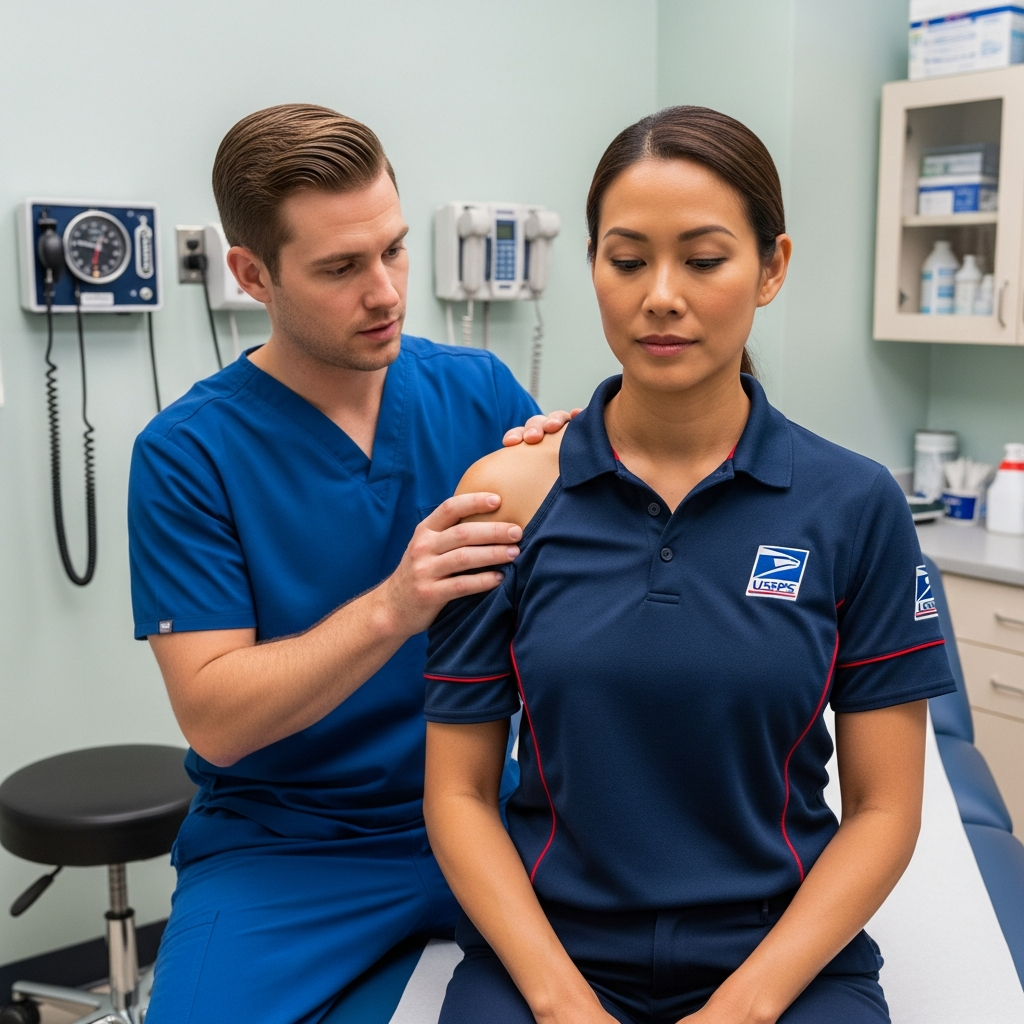
You’re hurrying to catch that morning meeting when it happens – your foot catches on that loose carpet edge near the elevator, and suddenly you’re sprawled across the hallway floor. Your wrist throbs, your knee’s screaming, and worse? You’re a federal employee, which means… well, honestly, you’re not entirely sure what it means. You just know it’s going to be complicated.
Or maybe it wasn’t a dramatic fall. Maybe it’s been building for months – that nagging back pain from hunching over your desk at the VA office, or the sharp shooting pain in your shoulder that started after you helped move those heavy filing cabinets. Either way, you’re hurt, you’re working for Uncle Sam, and you’re about to discover that federal work injuries exist in their own special universe of paperwork, procedures, and acronyms.
Here’s what nobody tells you when you first get that federal job (you know, between all the excitement about benefits and job security): getting injured at work as a federal employee is… different. Really different. While your neighbor who works at the local bank deals with standard workers’ comp, you’re entering the world of the Department of Labor’s Office of Workers’ Compensation Programs – or DOL for short. And let me tell you, it’s not exactly straightforward.
If you’re reading this in Knoxville – whether you’re stationed at Oak Ridge, working at the courthouse downtown, or serving at any of the federal facilities scattered around East Tennessee – you probably already know that navigating federal systems can feel like trying to solve a puzzle where someone keeps changing the pieces. The thing is, when you’re injured and potentially facing time off work, lost wages, or mounting medical bills, you don’t have the luxury of figuring it out as you go.
That throbbing in your wrist isn’t just going to wait while you spend weeks deciphering forms and procedures. Your family can’t pause their need for your paycheck while you play phone tag with distant offices. And honestly? You shouldn’t have to become an expert in federal workers’ compensation law just because you got hurt doing your job.
This is where a DOL clinic comes in – and I’m talking about something specific here, not just any doctor’s office that’ll see you after your workplace tumble. A true DOL clinic understands the intricate dance between your medical care and the federal system that’s supposed to support you. They speak both languages: medical and bureaucratic.
Think of it this way… you wouldn’t try to fix your car’s transmission with a butter knife, right? So why would you trust your federal work injury to someone who’s never dealt with DOL procedures? These specialized clinics don’t just patch you up and send you on your way – they actually understand how to work *within* the system to get you the care and compensation you’re entitled to.
Now, I know what you might be thinking. “Great, another medical specialist I need to research.” Or maybe you’re wondering if this is really necessary – can’t you just see your regular doctor? Here’s the thing… you could try that route. Lots of federal employees do. But here’s what often happens: your regular physician orders an MRI, the DOL questions whether it’s necessary, your claim gets delayed, and suddenly you’re three months into what should have been a straightforward process, still in pain, and frustrated beyond belief.
A DOL clinic in Knoxville that actually knows the ropes? They’re thinking three steps ahead. They know which documentation the DOL wants to see, how to phrase medical reports so they don’t get kicked back, and – this is huge – they understand the timeline pressures you’re facing.
Over the next few minutes, we’re going to walk through exactly how these clinics operate, what makes them different from your typical medical practice, and most importantly, how they can turn what feels like an overwhelming situation into something manageable. We’ll talk about the specific ways they advocate for you within the DOL system, how they handle everything from initial injury reports to ongoing treatment plans, and why having someone in your corner who actually understands federal procedures can make all the difference.
Because here’s what I’ve learned after watching countless federal employees navigate this system: you don’t have to figure this out alone.
The Federal Worker’s Safety Net (It’s More Complicated Than You’d Think)
When you work for the federal government – whether you’re sorting mail at the post office, maintaining trails in the Great Smoky Mountains, or managing veterans’ benefits – you’re covered by something called the Federal Employees’ Compensation Act (FECA). Think of it like… well, it’s *supposed* to be like a safety net, but honestly? Sometimes it feels more like trying to navigate a maze while blindfolded.
Here’s the thing about federal workers that most people don’t realize: you can’t just file a regular workers’ comp claim like someone working at a private company. Nope. You’ve got your own special system, run by the Department of Labor’s Office of Workers’ Compensation Programs. It’s kind of like being part of an exclusive club… except the membership benefits are really confusing and the customer service can be, let’s say, challenging.
What Actually Happens When You Get Hurt
So you’re injured on the job – maybe you slipped on that perpetually wet courthouse floor, or you tweaked your back lifting boxes at the VA hospital. In the private sector, you’d typically see any doctor, file a claim, and (hopefully) get things sorted relatively quickly.
But as a federal employee? You need to use what’s called a DOL clinic – a medical facility that’s specifically authorized to treat federal work injuries. It’s not that regular doctors can’t help you (they absolutely can for emergencies), but for your claim to move smoothly through the federal system, you need providers who speak FECA fluently.
Think of it like this: imagine you’re trying to get a prescription filled, but the pharmacy only accepts a very specific type of insurance card. Sure, other pharmacies might eventually figure out how to process it, but wouldn’t you rather go to the one that deals with your exact card type every single day?
The DOL Clinic Difference
DOL clinics aren’t just regular medical offices that happen to see federal workers. They’re facilities that have gone through a credentialing process with the Department of Labor. The doctors and staff understand the specific paperwork (and trust me, there’s paperwork), the timelines, the approval processes… all those administrative details that can make or break your claim.
Here’s where it gets interesting – and slightly counterintuitive. These clinics don’t just treat your injury. They become partners in managing your entire case. They know exactly how to document your condition in the language that DOL claims examiners understand. They’re familiar with the specific forms (CA-16, CA-17, CA-20 – catchy names, right?), and they understand the sometimes Byzantine approval processes.
Why Location Matters More Than You’d Think
Now, if you’re a federal worker in Knoxville, you might be wondering why you can’t just drive to Nashville or Atlanta for treatment. Well, you *could*, but here’s the reality: managing a work injury isn’t a one-and-done situation. You’re looking at initial treatment, follow-up appointments, physical therapy, possible specialist referrals…
Having a DOL clinic right here in Knoxville means you’re not spending half your recovery time on I-40. Plus – and this is something people don’t always consider – when you’re dealing with an injury, the last thing you want is the added stress of long drives to appointments.
The Documentation Dance
Actually, let me be honest about something that trips up a lot of federal workers: the documentation requirements are intense. Every visit, every treatment, every recommendation needs to be recorded in a very specific way. Regular doctors might write “patient improving” in their notes. DOL clinic providers know they need to be much more detailed about functional limitations, work restrictions, and objective findings.
It’s like the difference between texting a friend “feeling better!” versus writing a formal progress report for your supervisor. Same basic message, completely different level of detail and formality.
What This All Means for You
The bottom line? If you’re a federal worker in Knoxville dealing with a work injury, understanding these fundamentals can save you months of frustration and potentially thousands of dollars in benefits. The federal system isn’t necessarily better or worse than private workers’ compensation – it’s just different. And different requires specialized knowledge.
That specialized knowledge – both medical and administrative – is exactly what DOL clinics bring to the table. They’re not just treating your injury; they’re helping you navigate a system that can feel overwhelming even when you’re at 100%.
Getting Your Documentation Game Strong
Listen, I’ve seen too many federal workers stumble right out of the gate because they didn’t document their injury properly. You’re dealing with the Department of Labor here – they love their paperwork, and honestly? That’s actually working in your favor if you know how to play the game.
First thing – and I mean within 30 days – you need to file that CA-1 (for traumatic injuries) or CA-2 (for occupational diseases) form. But here’s what most people don’t tell you: don’t just fill it out and forget it. Make copies of everything. I mean everything. Keep a personal file at home because… well, paperwork has a way of disappearing in government systems.
Your DOL clinic in Knoxville will help you navigate this, but you should understand the process too. They’ll want detailed medical records, witness statements if you have them, and a clear timeline of events. The more specific you are – “I felt the sharp pain in my lower back at approximately 2:15 PM while lifting the 40-pound mail bag” – the better your chances of approval.
Choosing the Right Medical Providers (This Actually Matters)
Here’s something most people don’t realize: not every doctor knows how to handle federal workers’ compensation cases. The paperwork is different, the requirements are stricter, and frankly, some physicians just… don’t want to deal with it.
A specialized DOL clinic changes everything. These providers speak the government’s language fluently. They know exactly what documentation the Department of Labor wants to see, how to phrase medical findings, and which forms need to be completed when. It’s like having a translator who’s fluent in both “medical” and “bureaucratic.”
But here’s the insider tip – even with the right clinic, you need to be an active participant. Come to appointments prepared with a written list of your symptoms, how they’ve progressed, and specific examples of how the injury affects your daily work tasks. Don’t just say “my back hurts.” Say “I can’t lift files above shoulder height without shooting pain down my left arm, which makes organizing the upper filing cabinets impossible.”
Navigating the OWCP Maze Without Losing Your Mind
The Office of Workers’ Compensation Programs (OWCP) can feel like a black hole sometimes. You submit paperwork and… crickets. Or worse, you get a denial letter that reads like it was written by a robot having a bad day.
Your DOL clinic should be your advocate here, but you can help yourself too. Keep a log – sounds tedious, I know, but trust me on this one. Note every phone call, every piece of mail, every interaction with OWCP. Include dates, names, and what was discussed. This becomes crucial if there are delays or disputes later.
Also, understand that OWCP operates on their own timeline, which is usually much slower than you’d prefer. A typical claim can take 45-60 days for initial processing, and that’s if everything goes smoothly. Having realistic expectations helps manage the frustration.
Making the Most of Your Treatment Authorization
Once you’re approved (notice I said “once,” not “if” – staying positive here), you’ll get treatment authorization. This is where working with a DOL-savvy clinic really pays off. They know how to maximize your authorized treatment periods and can often get extensions approved when you need additional care.
Here’s a pro tip: don’t wait until you’re feeling 100% better to discuss return-to-work options. The transition back to full duties should be gradual and well-documented. Your clinic can help coordinate modified duty arrangements with your supervisor, which keeps you productive while protecting your recovery.
Building Your Support Network Early
Recovery from a work injury isn’t just physical – there’s a whole emotional and financial component that people don’t talk about enough. A good DOL clinic will connect you with resources beyond just medical treatment. This might include vocational rehabilitation if you can’t return to your previous role, or counseling services if you’re struggling with the stress of the whole situation.
Don’t try to tough it out alone. Federal employees often feel like they need to be stoic about workplace injuries, but that mentality can actually slow your recovery and complicate your case. Use the resources available to you – that’s what they’re there for.
The key is starting this process early, being thorough with documentation, and working with providers who really understand the federal system. It’s not always smooth sailing, but with the right approach, you can focus on healing instead of fighting bureaucracy.
When the System Feels Like It’s Working Against You
Let’s be honest – navigating federal workers’ compensation isn’t exactly a walk in the park. You’re dealing with pain, you’re stressed about work, and suddenly you’re drowning in paperwork that reads like it was written by robots for robots. It’s frustrating as hell.
The biggest challenge we see? Communication breakdowns. Your supervisor says one thing, DOL says another, and your doctor seems to be speaking a completely different language. Meanwhile, you’re sitting there wondering if anyone actually understands what you’re going through. A good DOL clinic acts as your translator – we know the system’s quirks (and trust me, there are plenty) and can help bridge those gaps between all the moving parts.
Here’s what actually helps: Find a clinic that speaks fluent “federal bureaucracy” but can explain things to you in plain English. They should be calling DOL on your behalf, not just handing you another form to fill out.
The Documentation Nightmare
You know what nobody tells you about work injuries? The paperwork never stops. Ever. Form CA-1, CA-2, CA-17… it’s like alphabet soup, but less fun and way more important for your livelihood.
The tricky part isn’t just filling them out – it’s knowing which forms matter when, what triggers what response, and how one small checkbox can delay your case for months. I’ve seen people lose benefits because they checked “yes” instead of “no” on something they didn’t fully understand.
A specialized DOL clinic becomes your paperwork lifeline. They’ve done this dance thousands of times and know exactly which i’s to dot and t’s to cross. More importantly, they know when to push back on requests that seem excessive or unnecessary. Sometimes DOL asks for documentation that’s… let’s say “above and beyond” what’s actually required.
The Waiting Game (And How It Affects Your Health)
Here’s something that really gets under my skin – the waiting. Waiting for claim approval, waiting for treatment authorization, waiting for someone to call you back. All while you’re in pain and wondering if you’ll ever feel normal again.
This limbo period does more than test your patience – it can actually make your condition worse. Stress, anxiety, delayed treatment… it’s a perfect storm for complicated recovery. Plus, financial stress while you’re waiting for benefits? That doesn’t exactly speed up healing.
The solution isn’t just patience (though you’ll need that too). It’s working with a clinic that knows how to expedite things properly. They know which calls to make, which faxes actually get read, and when to escalate issues up the chain. Sometimes a provider calling directly can move things along faster than you submitting the same request for the third time.
When Your Regular Doctor Just Doesn’t Get It
Your family doctor is probably great – but treating federal work injuries is a whole different beast. The documentation requirements, the specific terminology DOL wants to see, the way treatment plans need to be justified… it’s specialized knowledge that not every provider has.
I’ve seen excellent doctors write reports that technically say all the right things medically, but miss the specific language that DOL needs to approve continued treatment. It’s not their fault – they’re focused on making you better, not on federal bureaucracy.
This is where a DOL-experienced clinic really shines. They know exactly how to document your progress (or lack thereof) in ways that keep your benefits flowing while you recover. They speak both languages fluently – medical and federal.
The Return-to-Work Pressure
Nobody wants to be out of work indefinitely, but there’s often this underlying pressure to get back before you’re truly ready. Your workplace wants you back, DOL’s asking about timelines, and maybe you’re feeling guilty about being off work.
Here’s the thing – rushing back too early often leads to re-injury or setbacks that end up costing everyone more time and money in the long run. A good DOL clinic helps you navigate this pressure by providing clear, objective assessments of your capabilities.
They’ll work with you on modified duty options when appropriate, but they’ll also advocate for you when you’re not ready. Sometimes that means having difficult conversations with case managers or supervisors, but that’s part of protecting your long-term health and career.
The key is finding providers who see the big picture – not just your immediate symptoms, but how this injury fits into your life, your job requirements, and your future well-being.
What to Expect in Your First Few Weeks
The honest truth? Your first appointment might feel a bit overwhelming. There’s paperwork – more than you’d probably like – and you’ll need to tell your story again. I know, I know… you’ve already explained what happened to your supervisor, HR, maybe even a claims adjuster. But here’s the thing: your DOL clinic needs the complete picture to help you properly.
Your initial visit typically runs about an hour. Half of that’s going over your work history, the injury details, and any treatments you’ve already tried. The other half? That’s your doctor actually examining you, figuring out what’s going on beyond what the ER or urgent care might have caught in those first chaotic hours after your injury.
Don’t expect miracles on day one, though. Complex injuries – especially back problems, repetitive stress issues, or anything involving multiple body parts – take time to properly assess. Sometimes what seems like a simple strain turns out to be something more involved once the initial inflammation settles down.
The Reality of Recovery Timelines
Here’s where I need to be straight with you: recovery rarely follows the neat timelines we’d all prefer. You might be hoping to be back to normal in a few weeks, and… well, that’s possible. But it’s also possible you’ll need a few months. Or longer.
I’ve seen people with “minor” injuries struggle for months because they pushed too hard too fast. And I’ve watched others with seemingly serious problems bounce back surprisingly quickly because they followed their treatment plan religiously. Your body has its own schedule, and frankly, it doesn’t care about your work deadlines or vacation plans.
Most DOL cases I’ve worked with follow a pattern something like this: the first month is about getting an accurate diagnosis and starting treatment. Month two, you’re usually seeing some improvement – not necessarily dramatic, but you can tell things are moving in the right direction. By month three, you should have a pretty good sense of whether you’re healing well or if you need to adjust the approach.
But here’s what nobody tells you upfront – some days will feel like steps backward. That’s completely normal, even when you’re healing properly.
Working with Your Treatment Team
Your DOL clinic isn’t just one person making all the decisions. You’ll likely work with a primary physician, maybe a physical therapist, possibly a specialist or two depending on your injury. Sometimes there’s a case coordinator who helps manage the administrative side of things.
This can feel like a lot of people to keep track of, and honestly… it is. But each person has a specific role in getting you back to where you need to be. Your primary doctor oversees the big picture, PT works on the day-to-day functional stuff, specialists handle the complex medical questions.
The key thing? Communication flows both ways. If something isn’t working – whether it’s a treatment that’s causing more pain, a schedule that doesn’t fit your life, or you’re just not understanding what’s happening – speak up. These folks want to help you, but they can’t read your mind.
Navigating the Paperwork Trail
Let’s be real about this part: federal workers’ compensation involves paperwork. Lots of it. Forms for treatment approvals, progress reports, work capacity evaluations… it never seems to end.
Your clinic should handle most of the medical documentation, but you’ll need to stay on top of things too. Keep copies of everything. I mean everything – appointment summaries, test results, even those little printed receipts from the pharmacy. You probably won’t need most of it, but when you do need something specific, you’ll be glad you have it.
When Things Get Complicated
Sometimes – and this isn’t anyone’s fault – your case hits snags. Maybe your initial treatment isn’t working as expected. Perhaps you need a specialist who’s not immediately available. Or there might be questions about whether your injury is work-related.
When complications arise, your DOL clinic becomes your advocate. They know how to navigate the system, what documentation is needed, and how to get approvals for additional treatments. This is probably the biggest advantage of working with a specialized clinic versus trying to manage everything through your regular doctor’s office.
The bottom line? Most people do get better. It might take longer than you hoped, and the path might be more winding than you expected, but the vast majority of federal workers with job-related injuries eventually return to their normal activities. Your job right now is to focus on healing – let your treatment team worry about the rest.
You know, dealing with a federal work injury can feel like you’re stuck in some endless bureaucratic maze – one day you’re just doing your job, and the next you’re drowning in paperwork while your shoulder throbs or your back won’t stop aching. It’s exhausting, honestly.
But here’s what I’ve learned from watching countless federal employees work through this process: you don’t have to figure it all out alone. That’s really what specialized DOL clinics are all about – they’re not just another medical office you have to navigate. They’re more like having a knowledgeable friend who speaks both “doctor” and “Department of Labor” fluently.
Getting Your Life Back on Track
The thing about work injuries is… they don’t just hurt your body. They mess with your head too. You’re worried about your job, stressed about money, frustrated with the system. Maybe you’re even questioning whether you’re “injured enough” to deserve help (spoiler alert: if you’re hurting, you deserve care).
What makes these specialized clinics different is that they get it. They understand that your OWCP claim isn’t just paperwork – it’s your livelihood. They know that every day you’re not getting proper treatment is another day you’re not feeling like yourself.
The doctors and staff at DOL clinics have seen it all before. The construction worker whose knee gave out, the postal employee with chronic pain, the office worker dealing with repetitive stress injuries… They’ve helped thousands of federal employees get back to doing what they love, or at least what pays the bills.
You’re Not Asking Too Much
Sometimes people hesitate to seek specialized care because they think they’re being dramatic or that their injury isn’t “serious enough.” Listen – if you’re in pain, if you can’t do your job the way you used to, if you’re lying awake at night wondering how this is going to work out… those feelings are valid. Your injury matters.
These clinics exist specifically for situations like yours. The staff understands the unique challenges federal employees face, from the specific forms you need to the timelines you’re working with. They’ve built their entire practice around making this process as smooth as possible for you.
Taking That Next Step
Look, I know reaching out for help can feel overwhelming when you’re already dealing with so much. But think about it this way – every day you wait is potentially another day of unnecessary pain or stress. You’ve already been through enough, haven’t you?
The beautiful thing about working with a DOL clinic is that they handle the heavy lifting. While you focus on healing, they’re managing the paperwork, communicating with the Department of Labor, and making sure you get the care you need.
If you’re a federal employee dealing with a work injury in the Knoxville area, you don’t have to keep struggling alone. Reach out to a specialized DOL clinic today. Make that call, send that email, or just walk in and say “I need help.”
You deserve to feel better. You deserve proper care. And most importantly? You deserve to have someone in your corner who knows exactly how to help you get there.